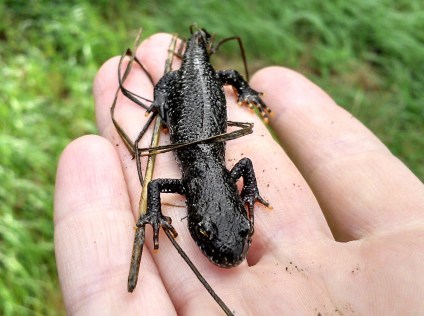
Great crested newts require ponds for breeding, but actually spend a great deal of their
lives on land in what is dubbed their “terrestrial phase”. They prefer habitats with rough grassland, scrub or woodland, foraging for food and seeking shelter in burrows, log and rubble piles, and usually stay within 250-500m of their breeding ponds.
The first stage of great crested newt surveys is to complete a “Habitat Suitability Index” assessment of the pond in question to determine how likely it is that it would be used by newts. This daytime assessment uses a combination of different factors, including the size of the pond, how many ponds are nearby, whether fish are present and how good the water quality is, to determine a value indicating likelihood of presence. The higher the value, the more likely it is that great crested newts could use the pond. Higher values tend to lead to the need for more detailed, night-time surveys to confirm if newts are indeed present.
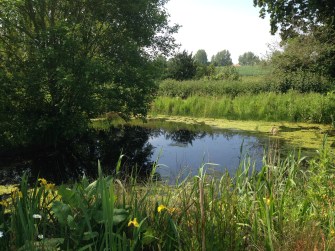
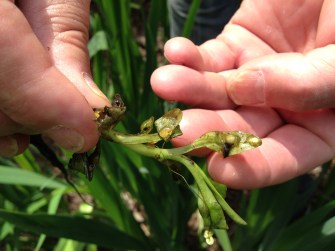
It can be almost impossible to find great crested newts on land, and so the nocturnal surveys for this species focus on the period of the year when they can be found breeding in ponds, which falls between mid-March to mid-June. Surveys should consist of four visits within this time period (six if newts are found and a population estimation is required), with at least half of the surveys being completed between mid-April to mid-May when the newts are most likely to be in the water.
A number of different techniques can be used to search for the newts, including looking for eggs on plants, using nets to try sweep newts from the pond bottom or from within pond vegetation, shining a bright light on the pond at night to search for newts at the waters surface, or using bottle traps left in place overnight.
The Legal Bit
| Great crested newts have legal protection under the Conservation of Species and Habitats Regulations 2010 (as amended) and the Wildlife and Countryside Act 1981 (as amended). It is illegal to deliberately injure, kill, capture or disturb a great crested newt, or to damage, destroy or obstruct any places used for breeding or resting. |
 Gray Ecology